Container freight rates fall amid weak demand
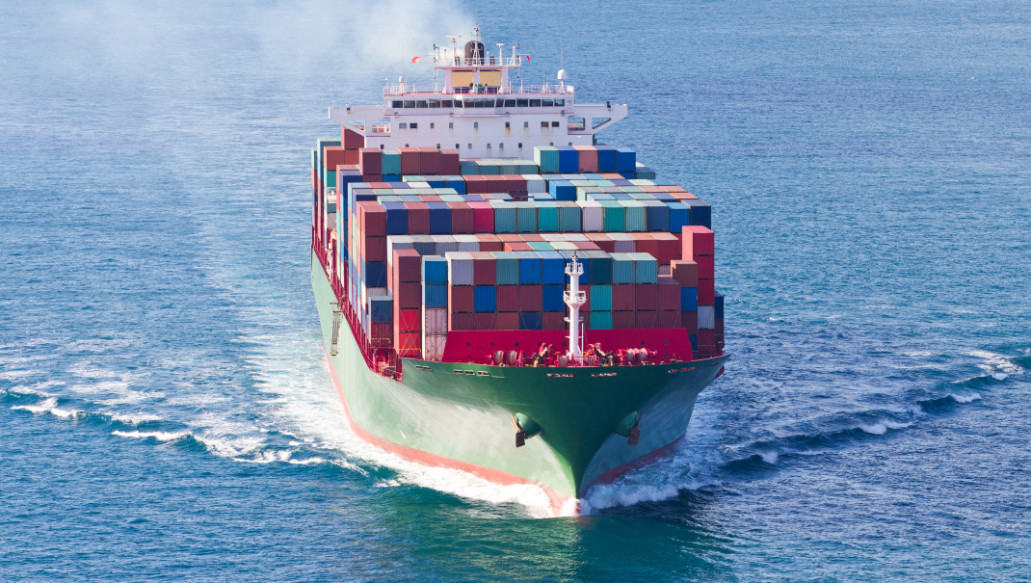
Container freight rates have fallen for the third consecutive week. The Drewry World Container Index (WCI) declined by 2% this week to $4,305 per 40-foot container, with routes from China to Europe and the United States facing particular pressure. Shipping lines are attempting to halt the decline by cancelling sailings and introducing new surcharges, but weak demand and increasing capacity are making a recovery uncertain.
The international container shipping market is gradually losing momentum. Drewry's WCI fell to $4,305 per container this week, compared with $4,389 last week and $4,429 at the end of October. This represents a decline of almost 3% since the end of October. Nevertheless, freight rates remain considerably higher than a year ago.
The decline is most pronounced on routes from Asia to the United States. Freight rates from Shanghai to New York fell by 3% this week to an average of $9,020 per container, their lowest level since August. Rates on the route to Los Angeles declined by 2% to $7,416, the lowest level since September.
Weakening US import demand is playing a significant role. According to the National Retail Federation, US container imports reached a peak of 2.37 million TEU in September. A decline of approximately 5% is forecast for October, while imports in November could be as much as 14% below September's level. This suggests that the exceptionally long peak season, which began as early as May, is coming to an end.
European freight rates remain under pressure
Freight rates on the Shanghai–Rotterdam route are also continuing to decline. According to Drewry, shipping costs fell by 3% this week to $3,504 per 40-foot container. The market on routes to the Mediterranean remains more stable, with the Shanghai–Genoa rate virtually unchanged at $4,168.
Figures from Freightos confirm the weakness in the market. The Freightos Baltic Index recorded a 5% decline on the Asia–Northern Europe route last week, bringing rates to approximately $3,400 per container. Rates to the Mediterranean fell by 1%. Despite the recent downward pressure, freight rates to Northern Europe remain around 50% higher than a year ago. For the Mediterranean, the difference is as much as 88%.
Shipping lines are attempting to counter falling rates by withdrawing capacity from the market. Eight blank sailings are scheduled on Asia–Europe routes next week, compared with five this week. The number of blank sailings on routes to the United States is also increasing.
In addition, shipping lines are announcing new surcharges. However, developments in recent weeks have demonstrated how difficult it is to implement freight rate increases and additional charges when demand remains subdued.
Return to Suez Canal increases capacity
Another development that could put downward pressure on freight rates is the gradual return of container services to the Suez Canal. According to market analyses, the number of container ship transits in October had already recovered to more than half the level recorded before the disruptions. Evergreen resumed several transits in early November, while Yang Ming is expected to return to the route in December.
The shorter shipping route between Asia and Europe has significant implications for available capacity. Vessels that no longer need to sail around the Cape of Good Hope can complete their round trips more quickly. As a result, ships and containers become available sooner for their next cargo. This increases effective shipping capacity without the need to add more vessels to the fleet.
Nevertheless, the situation in the Middle East remains uncertain. According to Drewry, 53 vessels passed through the Suez Canal last week, while only one vessel transited the Strait of Hormuz. Continuing security risks in the region therefore remain an important factor for international shipping.
Marine fuel costs fall sharply
One notable development is the recent decline in bunker fuel prices. According to shipping analyst Lars Jensen, the average global price of very low sulphur fuel oil (VLSFO) peaked at $999 per tonne on 30 October. It has since fallen to $911 per tonne, representing a decline of almost 9%.
In Singapore, one of the world's most important bunkering hubs, the decline has been even more pronounced. Prices have fallen from $1,020 to $817 per tonne, a reduction of almost 20%. This puts marine fuel prices at their lowest level since late August.
Lower bunker fuel prices reduce operating costs for shipping lines. Over time, this could create further scope for lower freight rates. At the same time, geopolitical developments continue to have a major influence. Any renewed escalation around the Strait of Hormuz could push fuel prices higher again.
Chinese New Year expected to support the market
Market analysts anticipate a modest recovery in freight rates on Asia–Europe routes over the coming weeks. Traditionally, freight rates begin to rise during this period ahead of Chinese New Year, which falls on 6 February in 2027. The seasonal peak usually occurs two to three weeks beforehand, around mid-January.
According to Lars Jensen, futures contracts on the New York Freight Index (NYFI) point to a relatively modest increase in rates. Market participants expect freight rates on the Asia–Northern Europe route to rise by approximately $480 per 40-foot container towards the January peak.
This outlook contrasts sharply with the considerably larger rate increases currently being announced by shipping lines. It highlights the extent to which carriers remain dependent on capacity restrictions to support freight rates.
For shippers, these developments are creating a stronger negotiating position. Demand for container shipping is declining, while shorter shipping routes and the introduction of new vessels are increasing available capacity. However, a sustained decline in freight rates is not yet guaranteed. Geopolitical uncertainty, potential port disruptions and the approaching Chinese New Year could all trigger renewed market volatility.